 Donato Capitella
AMD Strix Halo Llama.cpp Toolboxes
This project provides pre-built containers (“toolboxes”) for running LLMs on AMD Ryzen AI Max “Strix Halo” integrated GPUs. Toolbx is the standard developer container system in Fedora (and now works on Ubuntu, openSUSE, Arch, etc).
✅ Stable Configuration
- OS: Fedora 42/43
- Linux Kernel: 6.18.3-200
- Linux Firmware: 20251111
This is currently the most stable setup. Switching to newer kernels, such as 6.18.4 breaks all versions of ROCm but the cutting edge nightly builds from TheRock.
⚠️ Performance Regression Warning — 2026-02-03
There is a considerable performance regression when using Llama.cpp with ROCm 7.1+ or the nightly builds (from TheRock) compared to ROCm 6.4.4. This is a known issue tracked in ROCm-systems#2865.
AMD has pinpointed the cause to a compiler patch (llvm/llvm-project#147700) which causes VGPR spills and drops kernel occupancy. Reverting this patch restores performance (e.g., from ~1416 t/s to ~4378 t/s on gfx1100). We are tracking this issue and will update the toolboxes once a fix is available.
🚨 Updates — 2026-01-10
- Simplified Offering: Removed
rocwmmacontainers as standard kernels in newerllama.cppare now faster and stable. - Renamings:
rocm-7alphais nowrocm7-nightliesto better reflect that it tracks TheRock nightly builds. - Discontinued:
rocm-7rcbuilds are discontinued as they are obsolete. - Housekeeping: Deprecated
rocm-7betaand other older tags.
🚨 CRITICAL WARNING — 2026-01-08
Do NOT use linux-firmware-20251125. It breaks ROCm support on Strix Halo (instability/crashes).
AMD has recalled this update, but if you have already installed it, you must downgrade for now, until Fedora pushes a fix.
👉 Click here for Downgrade Instructions & Fix Guide
🚨 Updates — 2025-11-18
- Released new toolboxes for ROCm 7 that track the nightly builds, these are now called
rocm7-nightlies. - Updated and extended benchmakrs across all llama.cpp backend configurations, and included bennchmarks over RPC (two nodes) and long context (32k) -> Interactive Benchmark Viewer
Watch the YouTube Video
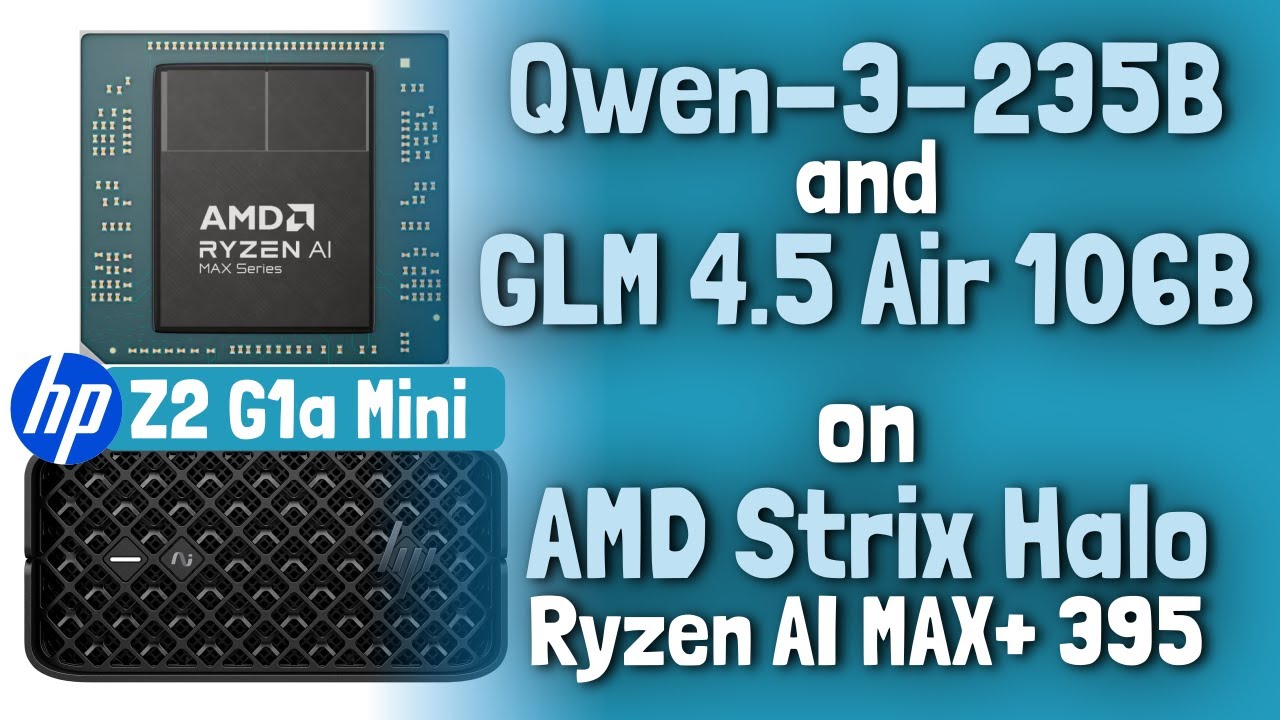
Table of Contents
- Llama.cpp Compiled for Every Backend
1.1 Supported Container Images - Quickest Usage Example
2.1 Creating the toolboxes with GPU access
2.2 Running models inside the toolboxes
2.3 Downloading GGUF Models from HuggingFace - Performance Benchmarks
- Memory Planning & VRAM Estimator
- Building Containers Locally
- Host Configuration
6.1 Test Configuration
6.2 Kernel Parameters (tested on Fedora 42)
6.3 Ubuntu 24.04 - Distributed Inference on Strix Halo Clusters
- More Documentation
- References
Quick Answers (Read This First)
How do I get a toolbox up and running?
Command — Create Vulkan (RADV) toolbox
toolbox create llama-vulkan-radv \
  --image docker.io/kyuz0/amd-strix-halo-toolboxes:vulkan-radv \
  -- --device /dev/dri --group-add video --security-opt seccomp=unconfined
Command — Create ROCm toolbox (6.4.4/7.1.1/rocm7-nightlies)
toolbox create llama-rocm-7.2 \
  --image docker.io/kyuz0/amd-strix-halo-toolboxes:rocm-7.2 \
  -- --device /dev/dri --device /dev/kfd \
  --group-add video --group-add render --group-add sudo --security-opt seccomp=unconfined
Command — Enter the toolbox shell
toolbox enter llama-vulkan-radv
Command — List detected GPUs (inside the toolbox)
llama-cli --list-devices
How do I download weights for a model?
Command — Download a GGUF shard from Hugging Face
HF_HUB_ENABLE_HF_TRANSFER=1 huggingface-cli download unsloth/Qwen3-Coder-30B-A3B-Instruct-GGUF \
  BF16/Qwen3-Coder-30B-A3B-Instruct-BF16-00001-of-00002.gguf \
  --local-dir models/qwen3-coder-30B-A3B/
HF_HUB_ENABLE_HF_TRANSFER=1 turns on the Rust-based accelerated downloader (pip install hf-transfer).
How do I run llama-server (and llama-cli) with a model?
Flash attention and no-memory-map must be enabled or Strix Halo will crawl/crash.
Command — Run llama-server with flash attention + no-mmap
llama-server -m models/qwen3-coder-30B-A3B/BF16/Qwen3-Coder-30B-A3B-Instruct-BF16-00001-of-00002.gguf \
  -c 8192 -ngl 999 -fa 1 --no-mmap
Command — Run llama-cli with the same essentials
llama-cli --no-mmap -ngl 999 -fa 1 -m models/qwen3-coder-30B-A3B/BF16/Qwen3-Coder-30B-A3B-Instruct-BF16-00001-of-00002.gguf \
  -p "Write a Strix Halo toolkit haiku."
How do I keep the toolboxes updated?
Command — Refresh every toolbox
./refresh-toolboxes.sh all
Command — Refresh specific toolboxes
./refresh-toolboxes.sh llama-vulkan-radv llama-rocm-7.2
1. Llama.cpp Compiled for Every Backend
This project uses Llama.cpp, a high-performance inference engine for running local LLMs (large language models) on CPUs and GPUs. Llama.cpp is open source, extremely fast, and is the only engine supporting all key backends for AMD Strix Halo: Vulkan (RADV, AMDVLK) and ROCm/HIP
- Vulkan is a cross-platform, low-level graphics and compute API. Llama.cpp can use Vulkan for GPU inference with either the open Mesa RADV driver or AMD's "official" open AMDVLK driver. This is the most stable and supported option for AMD CPUs at the moment.
- ROCm is AMD's open-source answer to CUDA: a GPU compute stack for machine learning and HPC. With ROCm, you can run Llama.cpp on AMD GPUs in a way similar to how CUDA works on NVIDIA - this is not the most stable/mature, but recently it's been getting better.
1.1 Supported Container Images
You can check the containers on DockerHub: https://hub.docker.com/r/kyuz0/amd-strix-halo-toolboxes/tags.
| Container Tag | Backend/Stack | Purpose / Notes |
|---|---|---|
vulkan-amdvlk |
Vulkan (AMDVLK) | Fastest backend—AMD open-source driver. ≤2 GiB single buffer allocation limit, some large models won't load. |
vulkan-radv |
Vulkan (Mesa RADV) | Most stable and compatible. Recommended for most users and all models. |
rocm-6.4.4 |
ROCm 6.4.4 (Fedora 43) | Latest stable 6.x build. Uses Fedora 43 packages with backported patch for kernel 6.18.4+ support. |
rocm-7.1.1 |
ROCm 7.1.1 | Current GA. Incompatible with kernel 6.18.4+ (missing patch). Use kernel ≤ 6.18.3. |
rocm-7.2 |
ROCm 7.2 | Latest stable 7.x build. Includes patch for kernel 6.18.4+ support. |
rocm7-nightlies |
ROCm 7 Nightly | Tracks nightly builds. Includes patch for kernel 6.18.4+ support. |
These containers are automatically rebuilt whenever the Llama.cpp master branch is updated, ensuring you get the latest bug fixes and new model support. The easiest way to update to the newest versions is by running the
refresh-toolboxes.shscript below.Legacy images
rocm-6.4.2androcm-6.4.3are still on Docker Hub for reproducibility but are intentionally excluded from the active list above. Preferrocm-6.4.4+or anyrocm-7.xtag unless you must bisect an old regression. (Therocm-7betaandrocm-7rcimages share the same status.)
2. Quickest Usage Example
2.1 Creating the toolboxes with GPU access
To use Llama.cpp with hardware acceleration inside a toolbox container, you must expose the right GPU device nodes from your host. The exact flags depend on the backend.
Command — Create Vulkan (RADV/AMDVLK) toolbox
toolbox create llama-vulkan-radv \
  --image docker.io/kyuz0/amd-strix-halo-toolboxes:vulkan-radv \
  -- --device /dev/dri --group-add video --security-opt seccomp=unconfined
Only /dev/dri is required for Vulkan. Make sure your user is in the video group.
Command — Create ROCm toolbox (swap the tag for 6.4.4, 7.1, rocm7-nightlies…)
toolbox create llama-rocm-7.1 \
  --image docker.io/kyuz0/amd-strix-halo-toolboxes:rocm-7.1 \
  -- --device /dev/dri --device /dev/kfd \
  --group-add video --group-add render --group-add sudo --security-opt seccomp=unconfined
ROCm needs both /dev/dri and /dev/kfd, plus the video, render, and sometimes sudo groups for full compute access. Swap rocm-7.1 for any other active ROCm tag (6.4.4, rocm7-nightlies, etc.).
Note:
--device /dev/driprovides graphics/video device nodes.--device /dev/kfdis required for ROCm compute.- Extra groups (
video,render,sudo) may be required for full access to GPU nodes and compute features, especially with ROCm.- Use
--security-opt seccomp=unconfinedto avoid seccomp sandbox issues (needed for some GPU syscalls).
2.1.1 Ubuntu users
Ubuntu’s toolbox package still breaks GPU access, so follow gyhor’s issue comment and use Distrobox instead:
distrobox create -n llama-rocm-7.1.1 \
  --image docker.io/kyuz0/amd-strix-halo-toolboxes:rocm-7.1.1 \
  --additional-flags "--device /dev/kfd --device /dev/dri --group-add video --group-add render --security-opt seccomp=unconfined"
distrobox enter llama-rocm-7.1.1
llama-cli --list-devices
2.1.2 Toolbox Refresh Script (Automatic Updates)
To pull the latest container images and recreate toolboxes cleanly, use the provided script:
📦 refresh-toolboxes.sh
./refresh-toolboxes.sh all
This will:
- Delete existing toolboxes (if any)
- Pull the latest images from DockerHub
- Recreate each toolbox with correct GPU access flags
You can also refresh just one or more toolboxes:
./refresh-toolboxes.sh llama-vulkan-radv llama-rocm-7.1.1
2.2 Running models inside the toolboxes
Command — Enter the toolbox shell
toolbox enter llama-vulkan-radv
This drops you into a shell inside the toolbox using your regular user account. The container shares your host home directory—anything in $HOME is accessible and writable inside the toolbox, so treat it like your host shell.
Command — Confirm Llama.cpp sees your GPU
llama-cli --list-devices
Run this inside the toolbox to verify RADV/AMDVLK/ROCm devices are visible before loading a multi-gigabyte model.
⚠️ Always pass flash attention and no-memory-map flags when running on Strix Halo.
llama-serverandllama-cliboth expect-fa 1 --no-mmap. Skipping either tanks performance or triggers kernel crashes because of the giant unified memory aperture.
Command — Run llama-cli with flash attention + no-mmap
llama-cli --no-mmap -ngl 999 -fa 1 \
  -m models/qwen3-coder-30B-A3B/BF16/Qwen3-Coder-30B-A3B-Instruct-BF16-00001-of-00002.gguf \
  -p "Write a Strix Halo toolkit haiku."
-ngl 999forces every layer onto the GPU.-fa 1turns on flash attention; omit it and throughput collapses.--no-mmapkeeps allocations in unified memory rather than trying to memory-map multi-gigabyte files.
Command — Run llama-server with flash attention + no-mmap
llama-server -m models/qwen3-coder-30B-A3B/BF16/Qwen3-Coder-30B-A3B-Instruct-BF16-00001-of-00002.gguf \
  -c 8192 -ngl 999 -fa 1 --no-mmap
Adjust -c for context length and never drop -fa 1 --no-mmap.
2.3 Downloading GGUF Models from HuggingFace
Most Llama.cpp-compatible models are on HuggingFace. Filter for GGUF format, and try to pick Unsloth quantizations—they work great and are actively updated: https://huggingface.co/unsloth.
Download using the Hugging Face CLI. For example, to get the first shard of Qwen3 Coder 30B BF16 (https://huggingface.co/unsloth/Qwen3-Coder-30B-A3B-Instruct-GGUF):
Command — Download a GGUF shard with huggingface-cli
HF_HUB_ENABLE_HF_TRANSFER=1 huggingface-cli download unsloth/Qwen3-Coder-30B-A3B-Instruct-GGUF \
  BF16/Qwen3-Coder-30B-A3B-Instruct-BF16-00001-of-00002.gguf \
  --local-dir models/qwen3-coder-30B-A3B/
HF_HUB_ENABLE_HF_TRANSFER=1 uses a Rust-based package that enables faster download (install from Pypi).
3. Performance Benchmarks
🌐 Interactive exploration of the latest benchmark runs: Interactive Benchmark Viewer
4. Memory Planning & VRAM Estimator
Running large language models locally requires estimating total VRAM required—not just for the model weights, but also for the "context" (number of active tokens) and extra overhead.
Use gguf-vram-estimator.py to check exactly how much memory you need for a given .gguf model and target context length. Example output:
$ gguf-vram-estimator.py models/llama-4-scout-17b-16e/Q4_K_XL/Llama-4-Scout-17B-16E-Instruct-UD-Q4_K_XL-00001-of-00002.gguf --contexts 4096 32768 1048576

--- Model 'Llama-4-Scout-17B-16E-Instruct' ---
Max Context: 10,485,760 tokens
Model Size: 57.74 GiB
Incl. Overhead: 2.00 GiB

--- Memory Footprint Estimation ---
   Context Size |  Context Memory | Est. Total VRAM
---------------------------------------------------
         4,096 |       1.88 GiB  |      61.62 GiB
        32,768 |      15.06 GiB  |      74.80 GiB
     1,048,576 |      49.12 GiB  |     108.87 GiB
With Q4_K quantization, Llama-4-Scout 17B can reach a 1M token context and still fit within a 128GB system, but... it will be extremely slow to process such a long context: see benchmarks (e.g. ~200 tokens/sec for prompt processing). Processing a 1M token context may take hours.
Contrast: Qwen3-235B Q3_K (quantized, 97GiB model):
$ gguf-vram-estimator.py models/qwen3-235B-Q3_K-XL/UD-Q3_K_XL/Qwen3-235B-A22B-Instruct-2507-UD-Q3_K_XL-00001-of-00003.gguf --contexts 65536 131072 262144

--- Memory Footprint Estimation ---
   Context Size |  Context Memory | Est. Total VRAM
---------------------------------------------------
        65,536 |     11.75 GiB |     110.75 GiB
       131,072 |     23.50 GiB |     122.50 GiB
       262,144 |     47.00 GiB |     146.00 GiB
For Qwen3-235B, 128GB RAM allows you to run with context up to ~130k tokens.
- The estimator lets you plan ahead and avoid out-of-memory errors when loading or using models.
- For more examples and a breakdown of VRAM components, see docs/vram-estimator.md.
5. Building Containers Locally
Pre-built toolbox container images are published on Docker Hub for immediate use. If you wish to build the containers yourself (for example, to customize packages or rebuild with a different llama.cpp version), see:
Full instructions: docs/building.md.
6. Host Configuration
This should work on any Strix Halo. For a complete list of available hardware, see: Strix Halo Hardware Database
6.1 Test Configuration
| Test Machine | Framework Desktop |
| CPU | Ryzen AI MAX+ 395 "Strix Halo" |
| System Memory | 128 GB RAM |
| GPU Memory | 512 MB allocated in BIOS |
| Host OS | Fedora 43, kernel 6.18-rc6.fc42.x86_86_64 |
6.2 Kernel Parameters (tested on Fedora 42)
Add these boot parameters to enable unified memory while reserving a minimum of 4 GiB for the OS (max 124 GiB for iGPU):
amd_iommu=off amdgpu.gttsize=126976 ttm.pages_limit=32505856
| Parameter | Purpose |
|---|---|
amd_iommu=off |
Disables IOMMU for lower latency |
amdgpu.gttsize=126976 |
Caps GPU unified memory to 124 GiB; 126976 MiB ÷ 1024 = 124 GiB |
ttm.pages_limit=32505856 |
Caps pinned memory to 124 GiB; 32505856 × 4 KiB = 126976 MiB = 124 GiB |
Apply the changes:
# Edit /etc/default/grub to add parameters to GRUB_CMDLINE_LINUX
sudo grub2-mkconfig -o /boot/grub2/grub.cfg
sudo reboot
6.3 Ubuntu 24.04
Follow this guide by TechnigmaAI for a working configuration on Ubuntu 24.04:
7. Distributed Inference on Strix Halo Clusters
You can use the included run_distributed_llama.py script to run models on a cluster of Strix Halo machines.
Setup
- Install Toolboxes: Install the required toolboxes on each node (main and workers).
- Download Models: Download the model weights to the main node.
- SSH Configuration: Configure SSH passwordless authentication from the main node to all other nodes. The script relies on being able to SSH into workers without user interaction.
ssh-copy-id user@worker-node-ip
Execution
Run the script on the main node outside of the toolbox:
python3 run_distributed_llama.py
This will launch the TUI, where you can:
- Configure the list of worker nodes (IPs).
- Select the model and toolbox version.
- Start the distributed inference.
The script automatically starts the necessary toolbox containers locally and on the remote nodes to handle the inference.
8. More Documentation
- docs/benchmarks.md: Full benchmark logs, model list, parsed results
- docs/vram-estimator.md: Memory planning, practical example runs
- docs/building.md: Local build, toolbox customization, advanced use
9. References
- The main reference for AMD Ryzen AI MAX home labs, by deseven (there's also a Discord server): https://strixhalo-homelab.d7.wtf/
- Most comprehesive repostiry of test builds for Strix Halo by lhl -> https://github.com/lhl/strix-halo-testing/tree/main
- Ubuntu 24.04 configuration https://github.com/technigmaai/technigmaai-wiki/wiki/AMD-Ryzen-AI-Max--395:-GTT--Memory-Step%E2%80%90by%E2%80%90Step-Instructions-(Ubuntu-24.04)